

For those who might have missed it in the flood of insanity that is the Trump administration, Trump issued an executive order limiting mail-in voting.
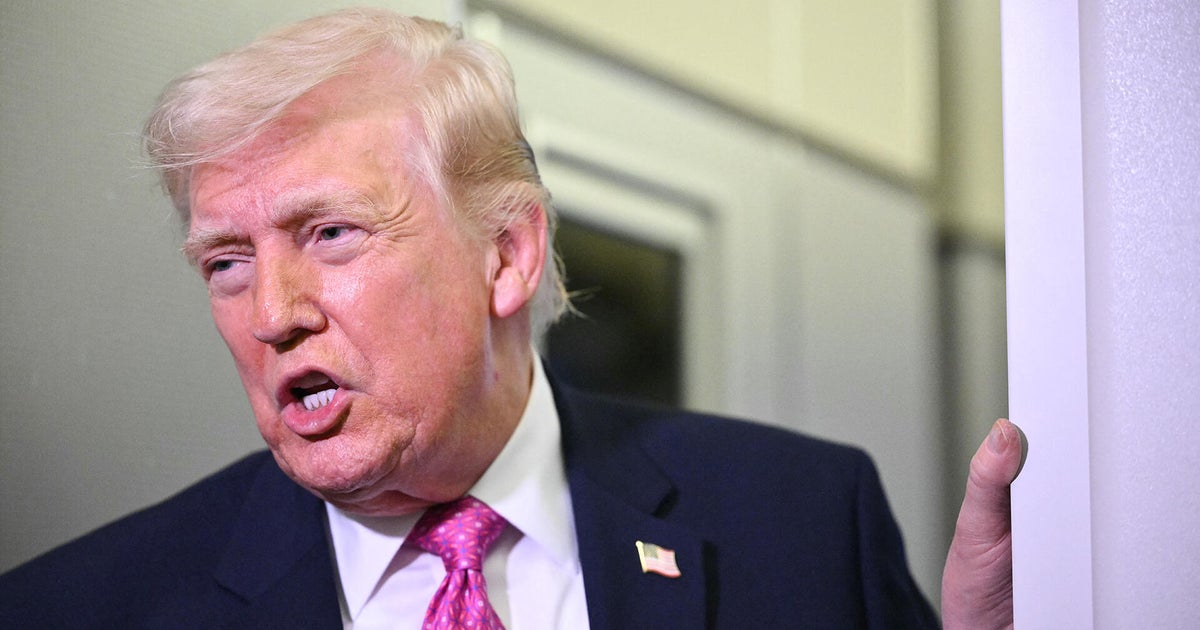
President Trump signed an executive order Tuesday requiring states to impose stricter mail-in voting rules and directing his administration to create a list of confirmed U.S. citizens who are eligible to vote in each state.
The additional requirements, made without any action by Congress, are all but certain to face challenges in the courts. It's not clear whether or how the order will affect the midterm primary elections, which are already underway in many states.
…
The order requires the newly confirmed Secretary of Homeland Security, Markwayne Mullin, to create a list of U.S. citizens eligible to vote in each state, using data from the Social Security Administration, a White House official told CBS News. It also says the U.S. Postal Service may only send absentee ballots to people on each state's federally prepared approved mail-in ballot list. There will be one envelo pe per ballot.
States that don't go along with the executive order are at risk of losing federal funding, a White House official said.
A few reminders:
Executive orders are directives issued by the President of the United States that tell federal agencies and executive branch officials how to carry out existing laws or manage government operations. Think of them as instructions from the head of the executive branch to the agencies that work under that branch.
They are not law. They do not override laws. They do not replace laws. Tey do not have the force of law.
Article I, Section 4, Clause 1, (the Elections Clause) states: "The Times, Places and Manner of holding Elections for Senators and Representatives, shall be prescribed in each State by the Legislature thereof; but the Congress may at any time by Law make or alter such Regulations, except as to the Places of chusing Senators."
The President and Executive Branch (Article II of the constitution) have no power or authority to make election rules or create election laws.
IANAL, but it seems to me that while the President may direct an agency of the executive branch (in this case, DHS) to create a list of eligible voters, that list would be irrelevant to voting rules, laws and actions. Likewise, the President directing the US Postal Service to not mail ballots to anyone who isn’t on an eligible voters list created by the Executive branch is prima facie unconstitutional.
Trump’s executive order is an intentional and blatant unconstitutional act and must be challenged in court and struck down.
Additionally, as I’ve argued in the past, there must be personal consequences for knowingly violating the constitution. The current status quo where Presidents and their cronies can act anti-constitutionally at will without any consequences other than a court saying “you can’t do this and you’ve been a bad boy” actually incentivizes unconstitutional actions.
Put this on the list of “Things To Fix” if we ever get out of this mess.
