

This guy needs a higher profile:
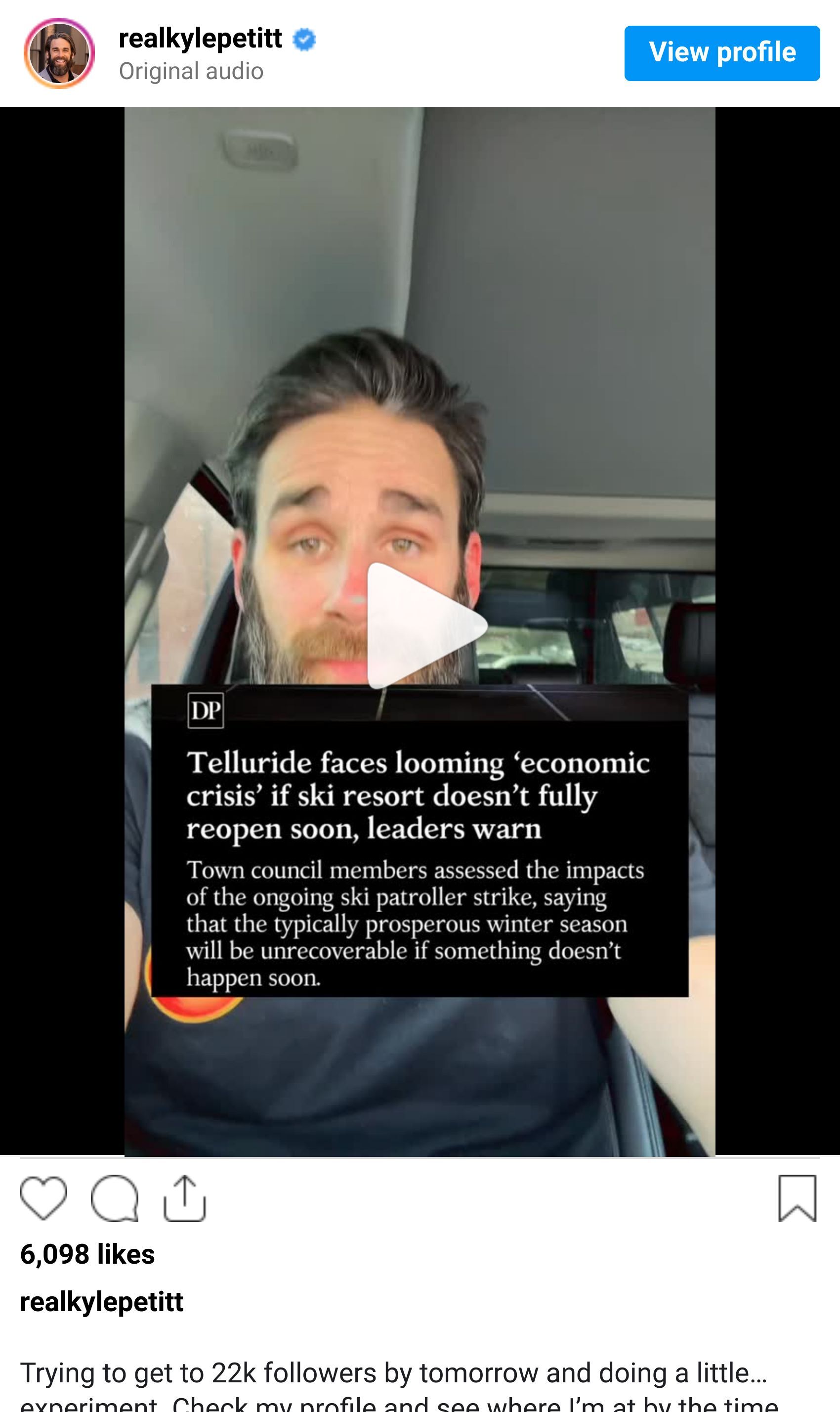
As a follow up to my previous post from a couple of days ago titled “Tech Billionaires will be the End of Us”, this post from Mr. Petitt hits the nail on the head. The battle being fought in Telluride is a microcosm of the battle being fought in towns, cities and states across the country, nationally, and even internationally.
It’s the imbalance of power that the wealthy, and especially billionaires who have essentially inexhaustible resources (i.e., money), hold over… the rest of us “normies”.
It’s something that is very noticeable even on a local level. Real estate developers and land speculators are a great example. They propose some humongous development that is out of character for the community. The town council or county commission says no. The developer just bides his time (seems like it’s generally a male thing, doesn’t it?), knowing he’s got the financial resources to wait until he’s got a more sympathetic elected official landscape. The Musks, Bezoses, and Ellisons of the world can wait until they've got a more regulation-adverse administration to propose certain mergers, acquisitions, tax or business policies.
As Mr. Petitt says, all they have to do is wait things out until we all start arguing amongst ourselves - trying to ascribe blame - and eventually cave.
This is why unions, as imperfect as they may be, are one of the only barriers against this power imbalance. In any organization, management/ownership will ALWAYS have an inherent advantage. Only collective action by the people who work in an organization can attempt to offset that advantage.
This is one of my favorite stories from High Country News in 2009:
Rural empowerment
The plateau south of Wheatland, Wyo., where Gregor Goertz and his family raise beef and organic winter wheat is blustery country. Winds averaging 27 mph comb the fields where 56-year-old Goertz once worked alongside his parents, and roar past cliffsides where Indians drove bison to their deaths. A few years ago, those winds started attracting energy developers. “It got to the point where three a week were calling us,” Goertz says.
Intrigued but unsure how to get the best deal from companies that want to develop their land, Goertz and some neighbors tapped their local U.S. Department of Agriculture Resource Conservation and Development coordinator, Grant Stumbough. With his help, they lobbied other landowners on the plateau, brought in experts, and in 2007 formed the Slater Wind Energy Association, which encompasses about 30,000 private acres and nearly 50 landowners.
The idea is relatively simple: Owners pool their land and evaluate its wind resources, put together a marketing package and present a unified voice in bargaining with companies for a fair price. Because all the members experience construction and visual impacts, everyone gets a share in the proceeds, even those who don’t end up with turbines on their land. Companies know there is community support and avoid having to negotiate separately with many landowners — though they may end up paying more.
It’s a model that could avert some of the animosity around wind farms. And proponents think it can revitalize rural communities and keep farmers and ranchers on their land despite rising costs.
Slater was the first of 11 associations (two more are in the works) to organize in southeastern Wyoming. One has signed with a developer and three others, including Slater, are close to making deals. Since last spring, 16 have sprung up in northeastern New Mexico. In Colorado, older landowner cooperatives that had trouble developing wind on their own are now signing with companies that take on the risks of projects in return for ultimately owning them. The idea is also catching on in Utah, Montana, Nebraska and South Dakota.
The main obstacles are lack of transmission lines and financing problems amid the economic crisis. Landowners also face a steep learning curve. Stumbough scrambles to keep up with the demand for seminars and webinars. The Colorado-based Rocky Mountain Farmers Union is working with Windustry, a Minnesota-based nonprofit, to provide technical and legal support to fledgling associations. It’s a key innovation for establishing fairness as Westerners tap their wind, says Windustry’s Lisa Daniels: “Otherwise it might end up being just another form of exploitation, like what’s happened with oil and gas leases.”
–by Sarah Gilman, HCN associate editor
When asked what they were trying to achieve, the landowners basically gave the following as their shared reasons for creating an “Association”: stronger market position, equitable compensation, shared community impact, and avoiding internal conflict.
Hmmm. ironic, isn’t it? Those conservative eastern Wyoming ranchers/farmers/landowners actually formed a union in order to fight the power/money imbalance and didn’t even know it. I still wonder how they would feel if someone told them that’s exactly what they did.
Can’t make stuff like this up.
