

Ahhhh. The musings of a banker who somehow became a billionaire and now wants to lecture others on what the U.S. is doing wrong about inequality (behind paywall, but I’ll quote segments of the article below):
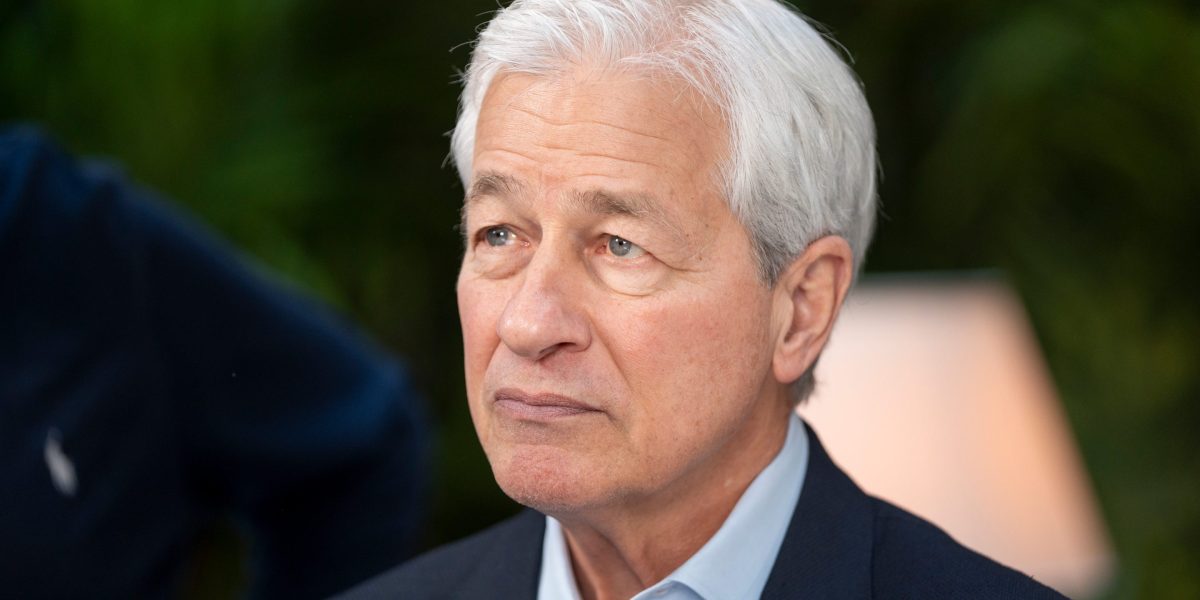
Per the article in Fortune:
“The bottom 50% of households in the U.S. own only $4.27 trillion of the nation’s $174 trillion in available wealth. By contrast, the top 0.1% own $25.07 trillion, and the top 99 to 99.9% own a little under $30 trillion, according to Federal Reserve data.”
As usual, I’m going to ask you to put up with some math in today’s column. As usual, I’m going to ask you to bear with me.
Let’s start with a chart from the Federal Reserve showing wealth holdings over time in the U.S.:

Now, let’s do the numbers:
Per the Census Bureau, the current population of the U.S. is approximately 340 million and there are currently approximately 133 million households in the U.S. That equates to about 2.5 people per household.
Per the chart above, the top 0.1% of the population ~133,000 households) holds $25.07 trillion in wealth. That equates to ~$188.5 million per household and ~$75 million per person
Per the chart above, the bottom 50% of the population (~66.5 million households) holds $4.27 trillion in wealth. That equates to ~$64,000 per household and ~$25,000 per person per person
That means households in the wealthiest 0.1% hold roughly 3,000 times the wealth of households in the bottom 50%.
It also means that 133,000 households hold nearly 6 times as much total wealth as the bottom 66,500,000 households.
Let me repeat that: THE 133,000 WEALTHIEST HOUSEHOLDS IN THE U.S. HAVE 6 TIMES MORE WEALTH THAN THE BOTTOM 66.5 MILLION HOUSEHOLDS.
Simply put, IMHO, this is not sustainable from a societal perspective.
But Jamie Dimon gets it, right? Let’s see what he has to say in the article (bold emphasis mine):
The resurgence in popular resentment of inequality has happened because “we have, in fact, left the lower-income folks behind,” Dimon said. The Wall Street veteran, who has the ear of everyone from world leaders to central bankers to the markets, said he often reminds well-off people that they don’t have to worry about the schools their children attend, and they don’t live in “crime-ridden neighborhoods.”
“If you are making less income and you’re in a poor rural area, or an inner city area, your schools aren’t good, you go to crime-ridden neighborhoods, [there is] more divorce, less jobs–it is becoming intergenerational, so let’s acknowledge it and fix it,” Dimon said.
Dimon contextualized the frustration of lower-income families, noting that, compared with the 1960s and 1970s, standards of living have improved across the board. In fact, a Fed study released last year found that the share of people who said they were financially “doing okay” or “living comfortably” rose from 62% to 73% in the U.S.
However, that doesn’t mean the divide between the haves and the have-nots is fair. Dimon added: “If you were the average citizen here and you say, ‘These wealthy people are getting unbelievably wealthy, and this segment’s been left behind,’ that’s kind of annoying.”
The “aggravation” felt by families whose schools are not doing well, who can’t find jobs, whose trades have shut down, is very real, added Dimon, but he added: “Let’s figure out how we’re gonna fix it going ahead. I hate crying over spilled milk; it’s not my nature.”
Yeah. I guess “annoying” is certainly one way to describe the feeling half the people in the country (whose average per person wealth is $25,000) might have who can’t afford health insurance or healthcare for them or their family, can’t afford childcare, can’t afford to buy a home (and even have trouble affording rent), can’t afford a new car (average new car price is $50K), and can barely afford to put food on the table.
Yeah, but in the world according to Dimon, let’s not overreact and let’s not cry over “spilled milk” (BTW, genius banker, not to be pedantic, it’s actually “spilt milk”).
So what does Dimon recommend we do as a society to reduce inequality? Well, his general view isn’t that the rich are too rich, but it’s that too many people at the bottom lack opportunity. His proposed remedies generally emphasize expanding opportunity, increasing growth, and improving institutions more than redistributing wealth.
Is he for higher corporate taxes? No evidence for that.
Is he for wealth taxes? No evidence for that.
Is he for stronger anti-trust enforcement? No evidence for that.
Is he for stronger social safety net programs: No evidence of that.
Is he for universal healthcare? No evidence of that.
To be fair, Dimon does believe in creating greater opportunity for those in the bottom 50% through changes to education (generally through early education, workforce training and skills development), healthcare (generally through more transparency of data), housing (generally through tax credits for builders to increase supply), regulations (reducing them b/c of course - especially for the financial sector b/c of course, and tort reform by stopping people from being able to hold corporations accountable by suing them b/c of course).
Dimon also focuses on opportunity through a growing economy. Which would make sense if the bulk of GDP and productivity growth went to individuals in the form of wages and benefits instead of the current model where most of it goes to corporations, their C-Suite Executives and shareholders. Per the Economic Policy Institute:

It’s probably not fair to pick on poor Jamie. His frame of references is after all, corporate finance and hobnobbing with the wealthy elites of the world. Based on that frame, he means well but his prescriptions to fix unsustainable inequality are skewed and, in my view, unlikely to fix the problem.
Because the real problem is that he and his peers have no clue what it’s like to live paycheck-to-paycheck. No clue what it’s like to have to choose between putting food on the table or taking your kid to the doctor. No clue what it’s like to lose your job because your car broke down, you can’t afford to fix it and therefore, you can’t get to work.
FULL DSICLAIMER: Most of us who are not in the top 0.1% or even themiddle class also truly have no idea what “thinking poor” is like (I wrote about “thinking poor” in a previous column).
Peter Paul and Mary - Rich Man, Poor Man
