

I’ve recently been mulling something over from a messaging perspective. I’m not sure it’s quite fully formed yet (welcome to my brain), however, I want to put it out into the atmosphere so the Artemis II astronauts can make fun of it like they make fun of bad 1980s sitcoms (it’s good to know astronauts have a sense of humor, even if it’s pretty tame).
Seriously, though, whenever I see or hear or read about Republican priorities vs. Democratic priorities, I keep thinking about one word: Choice.
Every policy decision. Every spending decision. Every personnel decision. Every budget decision. What do they all have in common? They all involve making a choice.
Every one of these choices is - and should be but is not always viewed through this prism - revelatory. Each choice reveals priorities. Each choice reveals values. Each choice reveals character. Each policy/political choice reveals allies and enemies and favored constituencies as well as disfavored groups.
I’m wondering if the simple message of this election might be: “This election is pretty simple. My opponent had a choice to make: he chose X, I choose Y”.
Here’s Robert Reich:
He seems to be talking about the media, but the unspoken idea here is that the media and/or certain politicians make a choice: tax cuts over healthcare, obscene military spending over childcare, scientific research and disaster relief, crony capitalism over safe roads and bridges. Taking care of billionaires over helping the vast majority of us who are struggling to keep up.
Of course, there’s perhaps the most glaring choice made by most Republican incumbents and candidates (one we can hang around any Republican’s neck no matter what they profess while running - remember make them play defense): the choice to support a President who is a pathological liar and who went against every single thing he ran on - primarily, cutting costs, no foreign wars, and deporting violent undocumented people (while, instead randomly and violently rounding up hard-working, otherwise law-abiding people in our communities).
As the Tennessee Holler writes, budgets are choices:
Jonathan Cohn at the Bulwark adds:
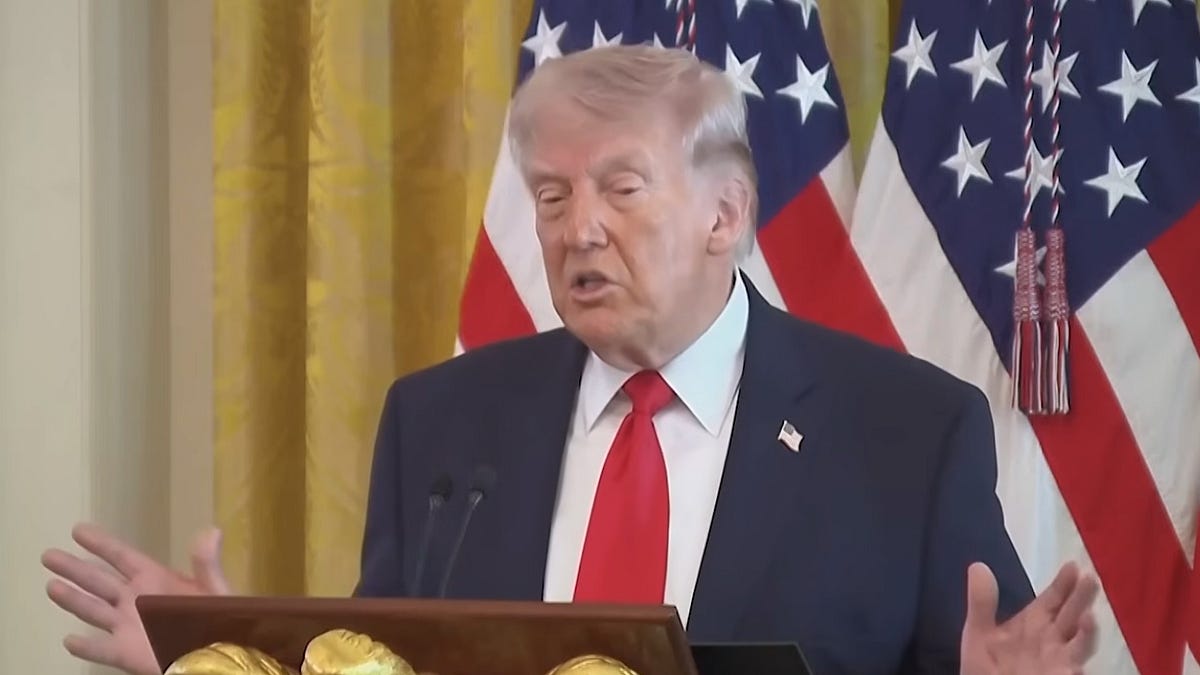
Typically, Republican leaders try very hard to deny they are starving social programs to fund the military, leaving Democrats to make the case on their own. Yet here was Trump coming right out and saying it. And while the president frequently blurts out statements that have no bearing on reality, in this case his description of how he’d like to rearrange federal spending priorities was pretty much on the nose.
In fact, just two days after he made those remarks, his administration released its budget for fiscal year 2027. It envisions a $1.5 trillion increase for defense, then proposes to offset that cost with a 10 percent reduction in domestic spending. Among the casualties would be a program that helps low-income Americans pay for heating and cooling—yes, right at a time when electricity prices are on the rise.
Not that it takes a new budget to see Trump’s priorities in action. It’s been less than a year since he worked with Republicans to pass historic cuts to Medicaid and food assistance, while refusing to extend Affordable Care Act subsidies holding down insurance premiums for more than 20 million people.
None of this has been popular. Most Americans are opposed to the Iran war, according to polling, just as most Americans opposed the Medicaid cuts and wanted to see those “Obamacare” subsidies stay in place. That’s going to hurt in the midterms, as my Bulwark colleague Catherine Rampell observed last week.
The key here is that by presenting everything your opponents say as a “choice”, it implies that it doesn’t have to be this way. Of course, this should be said explicitly as well: “My opponent Senator Bumfuck chooses to vote for spending an additional $200 billion for a war the American people don’t want; I would choose to use those funds to make sure every single American has access to basic, quality and affordable healthcare.” How about, "My opponent made a choice to vote for tax cuts for billionaires; I would choose to raise billionaire taxes to pay for better public schools and true energy independence instead of relying on oil controlled by sheiks in the Middle East.”
Another way to put it: “It doesn’t have to be this way. We can make different choices.”
I know “choice” has connotations related to abortion, but that is something we should defend, not shy away from. Crucially, Republicans like to say they want to provide American the freedom to choose. Except they really want to make those choices for us: people we can love, people we can marry, books we and our children can read, vaccines we can access, how we can vote, etc. Even their “giving people choice in healthcare” rings hollow when most Americans have trouble affording any doctor, and who gets to choose an emergency room when they are unconscious from a stroke or heart attack? Real healthcare choice lies in making sure every American can actually afford to go to the doctor in the first place.
We all make choices every day. Those choices have real consequences. Let’s make Republicans pay for the choices they’ve made and are continuing to make. Let’s let people know “It doesn’t have to be this way.”
As Aragorn asks of his undermanned army in Return of the King, “What say you?”
